The London Itinerary Argument, Slow Travel and the Checklist Both Make Their Case
Slow travel and the checklist both make a valid claim on a London week. This argument gives each side its due and then builds a truce.

The London Itinerary Argument, Slow Travel and the Checklist Both Make Their Case
You have 5 nights. That is the median stay for overseas visitors in London, from VisitBritain’s 2024 data. In those 5 nights you can see the Tower of London, Westminster Abbey, St Paul’s and the Churchill War Rooms. That is a serious sum in entry fees at 2026 prices, plus £8.50 a day on transport, plus £178 a night on a hotel room. Or you can rent a private room in a Zone 2 neighbourhood for £91 a night, buy a weekly loaf from a local baker, watch a community theatre production in a church hall, and leave having learned the name of the person who runs the corner greengrocer. Both are real versions of London. The question is which one is more true. The answer, argued below, is that the truest trip uses both, but not in the way you expect.
The Case for the Checklist
London’s attractions are not merely famous. They are world historical in a literal sense. The Tower of London has stood since the 1070s. Westminster Abbey has crowned every monarch since 1066. St Paul’s Cathedral survived the Blitz. The British Museum holds the Rosetta Stone. These are not Instagram backdrops. They are primary sources. A route that optimises for coverage is a form of respect. You are paying attention to the density of human achievement concentrated in a single square mile. The checklist style visitor spends £161 per person per day, according to VisitBritain’s 2024 data. That money buys you the fast track ticket, the audio guide, the pre booked slot, the river taxi connection, the West End show at £53 a seat. It buys efficiency. You do 10 things in 5 days because 10 things in that set are genuinely worth doing. The counter argument that this pace prevents understanding is true only if you treat the landmarks as things to photograph rather than things to read. Do your homework on the train. Arrive at the Tower of London for its 08:30 entry slot, before the crowds surge at 10:00. Spend 90 minutes inside, not 30. Read the wall panels. That is not superficial tourism. That is focused study.
What A Checklist Day Costs
A single Zone 1 pay as you go peak fare is £2.80. The daily cap in Zones 1 2 is £8.50. Add entry to Westminster Abbey at £30.00, a three course meal for two at a mid range restaurant at £70.00, and a pint of draught lager at £6.76. You are looking at a full day cost that matches the £161 daily average when you include the hotel. The checklist approach is expensive. It is also finite. You cannot do it on a budget. You should not try.
When You Should Pick The Checklist
If you are a first time visitor from a country where paid time off is scarce, the checklist is not a compromise. It is the correct strategy. The median US worker with 10 years of service gets 20 days off per year. 46% of US workers leave some of that unused, per the Pew Research Center 2024 data. You do not have time to wander. You have time to execute. Use it.
The Case for Slow Travel
London is 32 boroughs, 216 neighbourhoods with distinct high street identities, 8 Royal Parks, and 213 Green Flag spaces. The Greater London Authority reports that 47% of London’s land area is green space. The city is not a single destination. It is a federation of villages that happen to share a Tube map. Slow travel means picking one of those villages and living in it. Stoke Newington. Brockley. Rotherhithe. South Kensington if you want the museums, but the principle holds. You rent a private room in that neighbourhood for £91 a night, well below the £178 hotel average. You buy your groceries at the local market. You walk to Hampstead Heath or Richmond Park, which at 955 hectares is larger than the entire Principality of Monaco. You learn which bus route goes to the nearest library. The slow visitor spends £97 per day, according to VisitBritain 2024 data, and stays longer than 7 nights. The median overseas holiday by UK residents is 9.4 nights. Slow travel buys you time. It also buys you a different kind of knowledge. You will not see the Crown Jewels. You will understand why Londoners complain about the Northern line. That is a kind of truth the checklist cannot deliver.
The Carbon Argument Is Real
A return flight London to New York emits 1.2 tonnes of CO2 per passenger. The global average annual per capita carbon footprint is 4.7 tonnes. The Paris Agreement aligned budget for 2030 is 2.3 tonnes. If you are flying in, you have already spent a significant portion of your annual budget before you land. Staying 10 nights instead of 5 spreads the carbon cost over more meaningful days. Slow travel is not just a lifestyle preference. It is a logical response to the maths of aviation emissions.
When You Should Pick Slow Travel
If you have visited London before, or if you can take a full 9 to 10 night trip, slow travel is the better option. The average UK worker takes 33.5 days of leave annually, and the minimum statutory entitlement is 28 days including bank holidays. You have the time. You do not need to optimise.
One Week in London: Checklist Days and Slow Days
Neither side wins outright. A single week itinerary that assigns explicit days to each philosophy. Days 1, 3 and 5 are checklist days. Days 2, 4 and 6 are slow days. Day 7 is a hybrid. On checklist days you start early, you pre book everything, you use the Tube aggressively, and you accept that you will spend money. On slow days you do not leave your chosen neighbourhood until after lunch. You walk. You sit in a park. You talk to a market vendor. You pay the off peak fare of £2.70 if you take the Tube at all. The synthesis works because the two modes recharge each other. A checklist day exhausts you. A slow day restores you. By the end of the week you have seen the Tower of London, Westminster Abbey, the British Museum, the National Gallery, and the Tate Modern. And you have also sat on a bench in Greenwich Park watching the ships on the Thames. You have had both versions of London. You have not compromised. You have scheduled.
Which Neighbourhood For The Slow Days
Pick one of the 216 distinct high streets from the GLA data. Do not pick a tourist zone. Pick a place where the weekly rental for a one bedroom flat in Zone 4 runs £380 to £520, according to Zoopla 2025 data. That is Margate pricing without the train journey. Lewisham. Walthamstow. Tottenham. These are real London. You will not find a Michelin starred restaurant there. You will find a £6.76 pint and a meal in an inexpensive restaurant for £18.00. That is the London most Londoners live in.
_-_Thomas_Gardner_-_btv1b530567851_(3_of_4).jpg)
Worth it if
- Checklist: You see the world historical sites that define London's global significance in a limited time window.
- Checklist: The efficiency is a form of respect for the density of achievement in central London.
- Checklist: Works for travellers with low annual leave entitlement who cannot afford to wander.
- Slow Travel: You understand London as a collection of living neighbourhoods, not a museum diorama.
- Slow Travel: Costs £64 less per day, making a longer trip feasible on a fixed budget.
- Slow Travel: Aligns with carbon budgets if you are flying long haul to reach London.
Skip it if
- Checklist: Expensive at £161 per day, and the pace prevents deep connection to any one place.
- Checklist: You see the city as a checklist, which is a curated version, not the lived one.
- Slow Travel: You may miss the sites that are genuinely irreplaceable, like the British Museum's free permanent collection.
- Slow Travel: Requires more time than many international visitors have available.
Read next
-
 London on Sunday Markets Churches and Closures You Need to Plan Around
-
 A Rainy London Day Built by Neighbourhood Not a List of Museums
Stay dry in South Kensington via the station tunnel between the V&A and Natural History Museum, or spend the day in Clerkenwell from the Barbican to Exmouth Market.
A Rainy London Day Built by Neighbourhood Not a List of Museums
Stay dry in South Kensington via the station tunnel between the V&A and Natural History Museum, or spend the day in Clerkenwell from the Barbican to Exmouth Market.
-
 Piccadilly Without Spending the Day in Shops
Visit the Royal Academy, browse Hatchards bookshop, walk the Burlington Arcade, and book afternoon tea at The Wolseley—no Regent Street shopping required.
Piccadilly Without Spending the Day in Shops
Visit the Royal Academy, browse Hatchards bookshop, walk the Burlington Arcade, and book afternoon tea at The Wolseley—no Regent Street shopping required.
-
 Hampstead Heath and the Village A London Day That Needs Decent Weather
Climb Parliament Hill for the skyline view, swim in the mixed pond, and retreat to Kenwood House if the weather turns—all from Hampstead station.
Hampstead Heath and the Village A London Day That Needs Decent Weather
Climb Parliament Hill for the skyline view, swim in the mixed pond, and retreat to Kenwood House if the weather turns—all from Hampstead station.
-
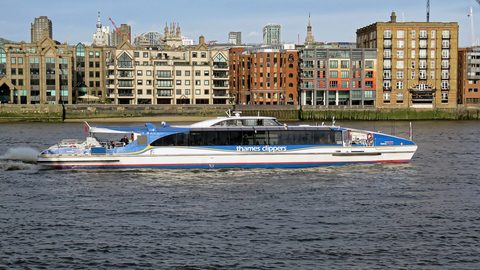 Thames Boat or Tube When the Slow Route Earns Its Fare
The Uber Boat beats the Tube on three specific Thames journeys: Bankside to Greenwich, Westminster to Tower Pier, and Blackfriars to Canary Wharf.
Thames Boat or Tube When the Slow Route Earns Its Fare
The Uber Boat beats the Tube on three specific Thames journeys: Bankside to Greenwich, Westminster to Tower Pier, and Blackfriars to Canary Wharf.
-
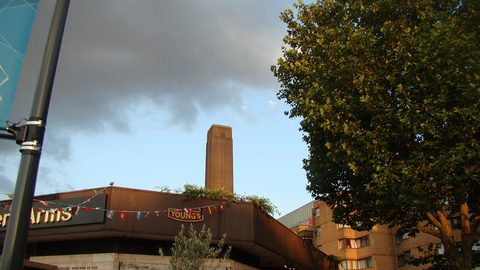 A South Bank Walk That Is Worth Your Time Not an Attraction Checklist
Start at Southwark Bridge, move through Bankside and the Tate Modern's Turbine Hall, then reach Borough Market before the 11:30am lunch crush.
A South Bank Walk That Is Worth Your Time Not an Attraction Checklist
Start at Southwark Bridge, move through Bankside and the Tate Modern's Turbine Hall, then reach Borough Market before the 11:30am lunch crush.
-
 SIMs, eSIMs and Staying Connected on Long-Distance Walking Routes
Honest look at mobile connectivity on long-distance walking routes. Real costs of local SIMs vs eSIMs, rural coverage gaps, and activation headaches in border zones.
SIMs, eSIMs and Staying Connected on Long-Distance Walking Routes
Honest look at mobile connectivity on long-distance walking routes. Real costs of local SIMs vs eSIMs, rural coverage gaps, and activation headaches in border zones.