The Province of Quebec, Where the Seasons Decide the Itinerary for You
Quebec beyond the walls is four provinces in one, each unlocked by a season: the sugaring-off spring, the fjord summer, the Charlevoix autumn, and the deep snow winter.
- Flag
-
- ISO code
- CA
- Currency
- CAD
The Province That Changes Its Shape Four Times a Year
You have a week and you want to see Quebec. The problem is that Quebec does not exist. Not as a single place. The province covers 1,542,056 km². That is larger than France and Spain combined. The only way to see it properly is to let the season decide which version of the province you get. Spring, summer, autumn, and winter each reveal a different Quebec, and outside the walled city of Quebec City, the recommendations shift completely. Pick the wrong season for the wrong region and you will be driving through fog on a coastal highway with nothing open. Pick the right one and the entire province opens like a locked room.
Two cities anchor the traveler's mental map. Quebec City, founded in 1608, population 549,459, speaks French at home 90.1% of the time. The island city to its southwest, founded in 1642, population 1,762,949, speaks French at home only 53.7%, with English at 18.2%. They sit 255 km apart on Autoroute 20, a drive of 2 hours 45 minutes to 3 hours 15 minutes in non-peak traffic. The VIA Rail train covers it in 3 hours 8 minutes on the fastest 2024 schedule. The Orléans Express bus takes 3 hours 15 minutes to 3 hours 45 minutes. You will pass through one or both. Do not linger. The real Quebec starts once you leave the urban corridor.
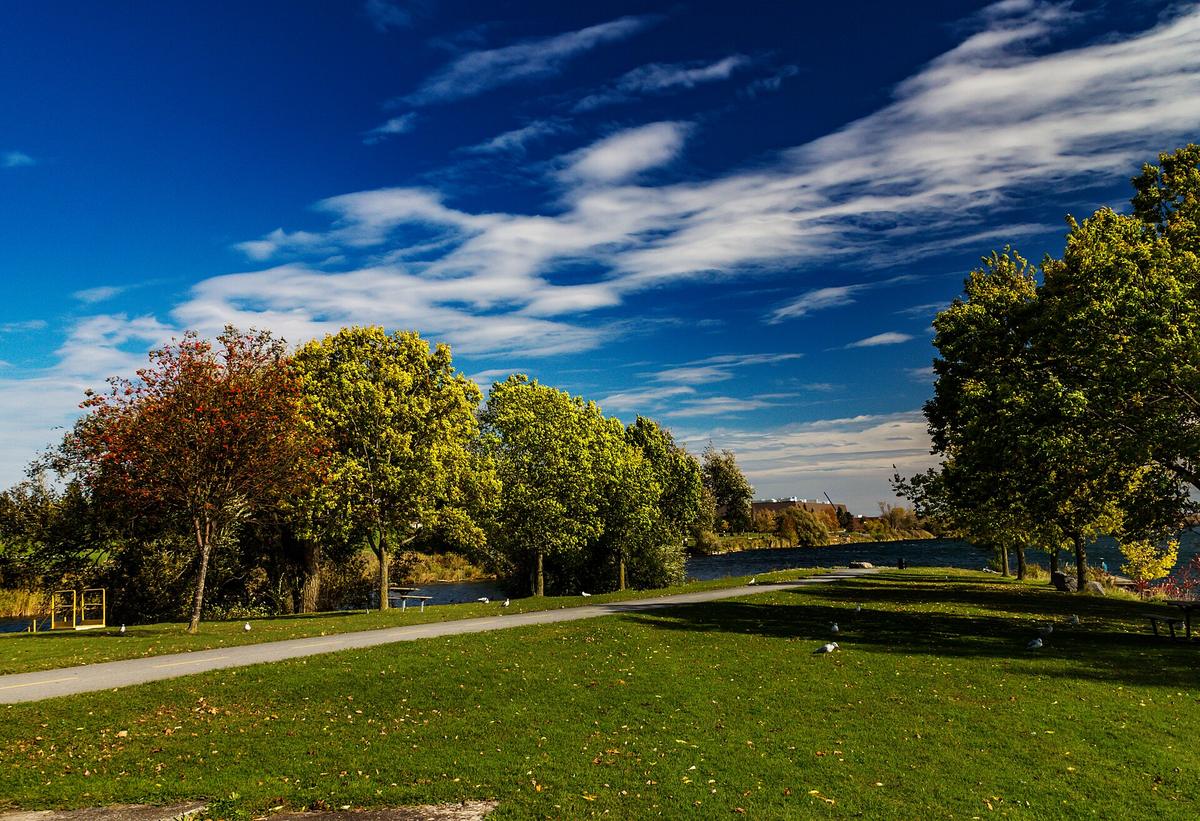
Spring: Sugar Season in the Eastern Townships
The Sugar Shack Window
Spring in Quebec is not a season of flowers. It is a season of sap. From late February to late April, the sugar shacks (cabane à sucre) of the Eastern Townships run hard. Quebec produces 72% of the global maple syrup supply, and this is where the bulk of it comes from. The window is narrow: roughly March and early April, when nights are below freezing and days climb above. Book a table at a sugar shack for Sunday brunch, not Saturday evening. Sunday morning is when families go, and the atmosphere is louder, messier, and better. Skip the tourist-oriented shacks near the city. Drive 90 minutes east to the Townships and find one that still boils sap in a wood-fired evaporator.
What You Will Eat
The meal is fixed. You will get pea soup, baked beans, ham, eggs, oreilles de crisse (fried pork rind), pancakes, and maple taffy poured onto snow. The cheese curds in the poutine will be fresh and room temperature because that is how poutine works: white cheddar curds that squeak against your teeth. The dish originated in Warwick, Quebec, in 1957 (though Drummondville disputes the claim), and the curd spec has not changed. Do not ask for melted cheese here. That is not poutine.
The Ice Hotel, Briefly
Spring is also the season to watch for the ice hotel at Village Vacances Valcartier in Saint-Gabriel-de-Valcartier. It opens from early January to late March each year. If you arrive in late March you may catch the final week. The hotel uses 30,000 tonnes of snow and 500 tonnes of ice to build its rooms. It is not worth an overnight stay unless you have done every other cold-weather experience. The tour, which takes about an hour, is the better use of your $5 CAD funicular fare in Old Quebec, or the equivalent cost for entry here. Arrive by 10:00 to avoid the school groups.
Summer: the Saguenay Fjord and the Gaspé Peninsula
Whales at Tadoussac
Summer in Quebec belongs to the water. Specifically, the Saguenay, St. Lawrence Marine Park, where the fjord meets the river at Tadoussac. Whale watching runs from May to October, but peak blue whale sightings cluster in August and September. Five species appear regularly: beluga, minke, fin, humpback, and blue. If you want the blue whale, the largest animal on the planet, go the last week of August. Book a Zodiac, not a large catamaran. The Zodiac gets you close to the water line, and the captain can turn fast when a fin whale surfaces. The larger boats are stable but distant. Arrive in Tadoussac by 08:00 to secure parking. The lot fills by 09:30.
Driving the Gaspé Loop
From Tadoussac, the drive east to the Gaspé Peninsula is 920 km from the city, about 10 hours of driving time without stops. Break it at Rimouski or Sept-Îles (900 km from the city). The Gaspé coast is not a weekend trip. Budget five days minimum. The route circles the peninsula counterclockwise: start at Sainte-Flavie, take Route 132 east along the south shore, cross to Percé, then drive the northern coast back. Percé Rock is the obvious stop, but the better one is Forillon National Park at the peninsula's tip, where the Appalachian range drops into the Gulf of St. Lawrence. Hike the short trail to the lighthouse at sunrise. You will have the path to yourself.
Avoid the July 1 Canada Day weekend and the Quebec construction holiday (the last two weeks of July). The Gaspé's single-lane bridges and two-lane highways turn into parking lots. The serpentine coastal route with its cliffs and coves makes every kilometer feel earned. Fill your gas tank at any village with a station. The next one may be 80 km away.
Autumn: Charlevoix and the Laurentians at Colour Peak
Charlevoix First
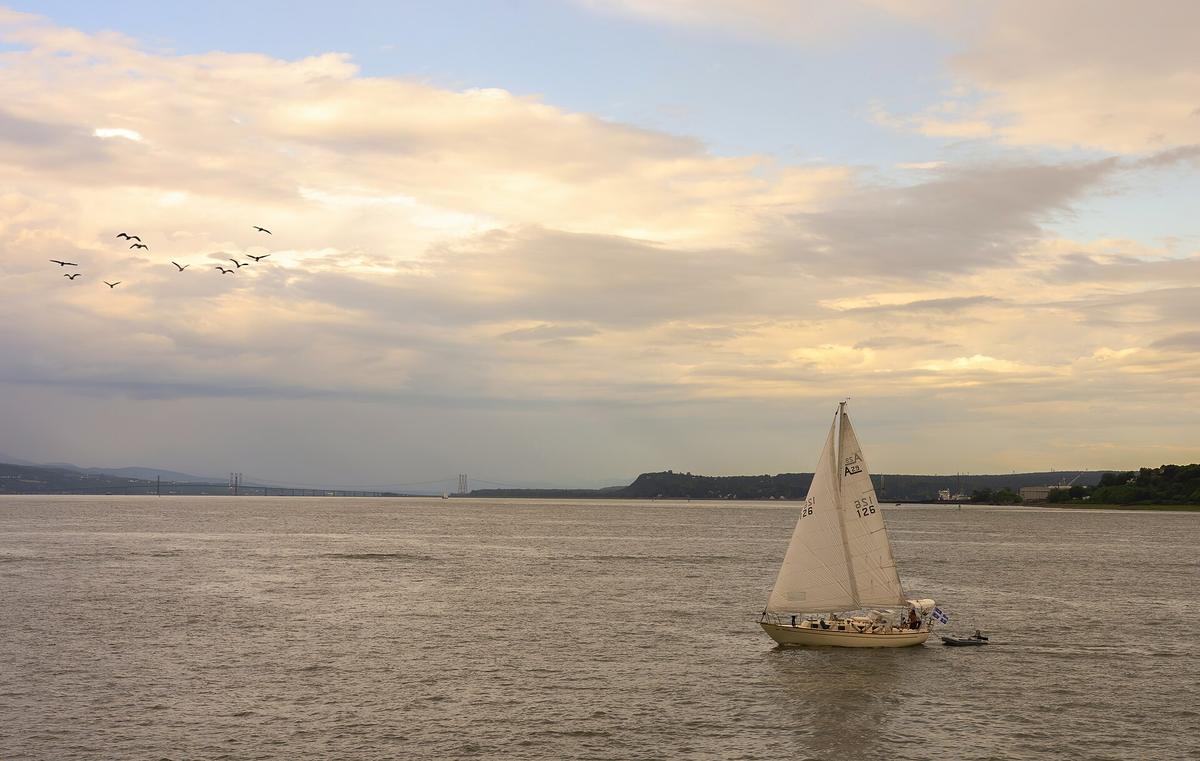
Autumn color in Quebec moves north to south, higher elevation to lower. The Laurentians peak in late September to early October. Charlevoix peaks in the first two weeks of October. Southern regions peak the last week of September to the first week of October. If you have to choose one region, choose Charlevoix. The region was designated a UNESCO biosphere reserve in 1988, and the 645 m vertical drop of Mont-Tremblant in the Laurentians (875 m highest peak, 305 ha skiable terrain) is impressive, but Charlevoix gives you the St. Lawrence River as a foreground for the color. Drive Route 362 from Baie-Saint-Paul to La Malbaie. That 55 km stretch is the best leaf-peeping road in the province. Do it on a Tuesday or Wednesday. Weekends in October are gridlock.
Baie-Saint-Paul and the Train
Book accommodation in Baie-Saint-Paul six months ahead. The town has about 7,000 residents and a concentration of galleries. The art is secondary to the landscape. The mountain ridges run parallel to the river, and the light in late afternoon turns the maple forests orange and the river silver. The funicular in Old Quebec City ($5 CAD in 2024, connecting Rue du Petit-Champlain to Dufferin Terrace) is unrelated to Charlevoix but works as a gateway: take the train from Quebec City to Baie-Saint-Paul on the Train de Charlevoix. The schedule runs through October. Sit on the right side of the carriage for the river views.
The Laurentian Alternative
The Laurentians, by contrast, are for people who want the color without the river. The region has 11 downhill ski areas and over 40 cross-country routes. In autumn the ski lifts run for sightseers. The gondola at Mont-Tremblant will take you to the 875 m summit. The view is a solid rectangle of orange, red, and yellow. It is worth the ticket price if the sky is clear. If it is overcast, drive the back roads around Saint-Sauveur instead. The color is just as good and costs nothing.
.jpg)

Winter: Snowmobile Trails and the Ice Hotel Beyond the City
The Credentials of Cold
Winter in Quebec is not a hardship to be endured. It is the reason to come. Quebec City's January mean daily high is −7.9 °C, its mean daily low −17.7 °C. The southwestern metropolis is warmer by about three degrees: −5.3 °C high, −14.7 °C low. The record low there was −37.8 °C on January 15, 1957. Quebec City's record low was −36.7 °C on February 2, 1962. These numbers are not warnings. They are credentials. The province gets 303 cm of snow annually in Quebec City and 210 cm in the larger city. The winter tire mandate runs December 1 to March 15 each year. Do not try to drive north without winter tires. The police check and the fine is real.
The Snowmobile Network
The snowmobile trail network in Quebec is the largest in the world, with over 33,000 km of groomed trails. The best entry point for a multi-day ride is the town of Saint-Michel-des-Saints, about two hours north of the island city. Rent a sled, hire a guide, and ride the trails of the Haute-Mauricie region. The landscape is boreal forest and frozen lakes. The silence when you stop the engine is total. This is winter Quebec that the cruise ship passengers in Old Quebec never see.
The Carnival
If you prefer stationary cold, the Quebec Winter Carnival (Carnaval de Québec) runs from late January to mid-February each year. It has been held since 1894, continuously annual since 1955. The ice palace on the Plains of Abraham is the centerpiece, but the real event is the night parades and the canoe race across the partially frozen St. Lawrence River. Arrive at the parade route by 17:00 for a 19:00 start. The side streets fill fast. Wear boots rated to −30 °C. The carnival is not a casual walk.
Places in Quebec
Common Questions
What is the best month to see fall colors in Quebec?
Late September to early October in the Laurentians. The first two weeks of October in Charlevoix. The color moves north to south. Book accommodation six months ahead for Charlevoix. Drive Route 362 on a weekday to avoid crowds.
Can I see whales in Quebec without a boat tour?
No. The best land-based viewing is at the Saguenay Fjord observation deck in Tadoussac, but you will only see belugas close to shore. For fin, humpback, and blue whales, book a Zodiac tour from Tadoussac between August and September.
Is the ice hotel worth visiting in winter?
The 30,000-tonne Hôtel de Glace at Valcartier is worth a day visit, not an overnight stay. Tour it in the morning before school groups arrive. Skip the overnight unless you are determined to sleep on an ice bed at $400+ CAD per night.
Do I need to speak French to travel in Quebec?
In Quebec City, 90.1% of residents speak French at home, and 34.3% are bilingual. In the larger city, 58.4% are bilingual. Learn basic phrases for the regions outside the cities. Sugar shacks and small-town gas stations expect French. The provincial language law dates to 1977.
Read next
-
 Québec
Quebec City in winter is an argument the cold makes and the murals win, a walled fortress where the ice is part of the architecture and the festivals dare you to stay outside.
Québec
Quebec City in winter is an argument the cold makes and the murals win, a walled fortress where the ice is part of the architecture and the festivals dare you to stay outside.
-
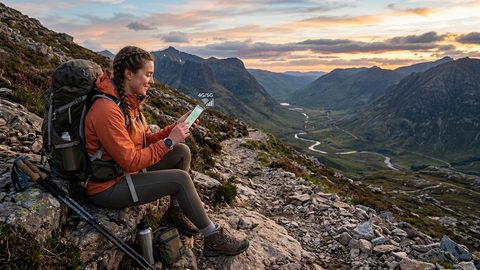 SIMs, eSIMs and Staying Connected on Long-Distance Walking Routes
Honest look at mobile connectivity on long-distance walking routes. Real costs of local SIMs vs eSIMs, rural coverage gaps, and activation headaches in border zones.
SIMs, eSIMs and Staying Connected on Long-Distance Walking Routes
Honest look at mobile connectivity on long-distance walking routes. Real costs of local SIMs vs eSIMs, rural coverage gaps, and activation headaches in border zones.