London Landmarks That Let You Down, and What to Do With the Aftermath
Some London bucket-list stops disappoint for structural reasons, not just bad luck. Here is what fails, why, and what does the same job better.

London Landmarks That Let You Down, and What to Do with the Aftermath
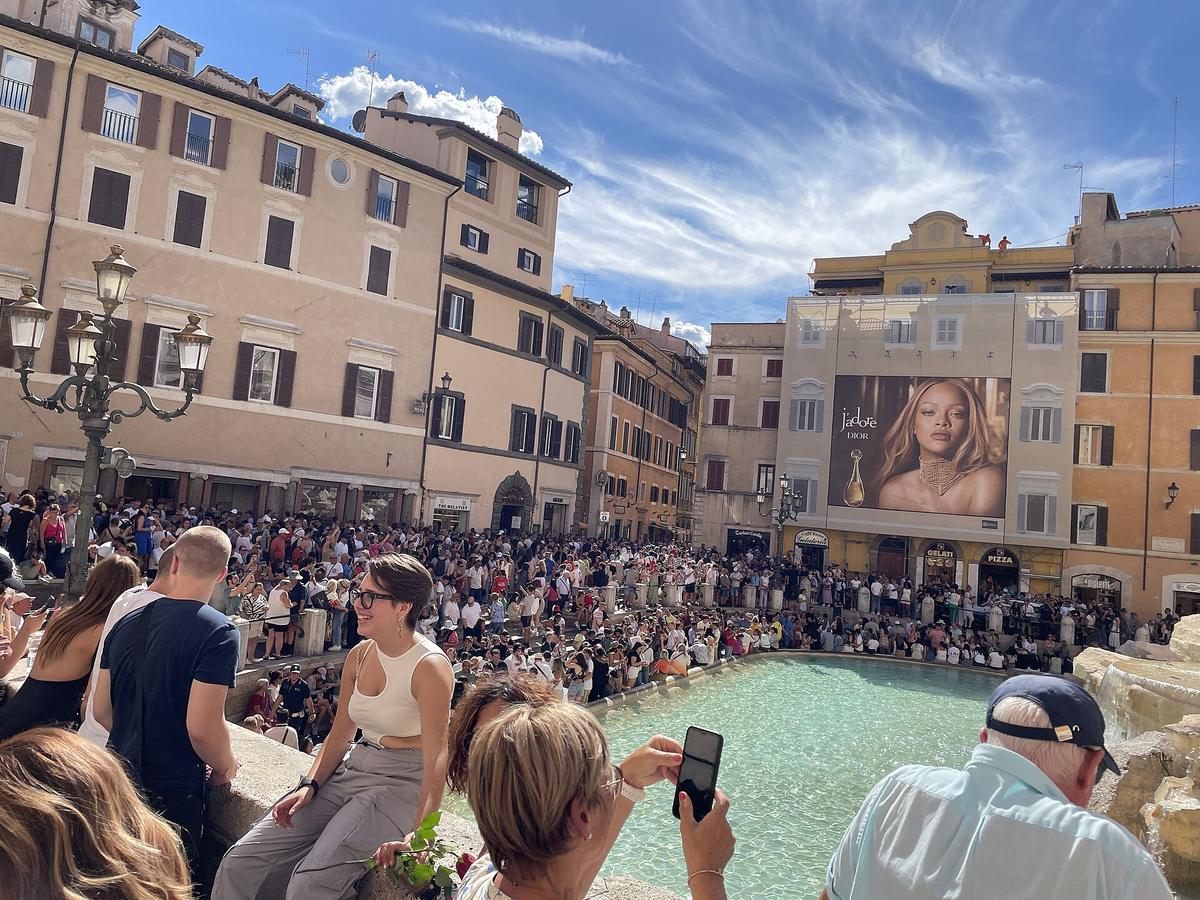
You booked the London Eye for sunset, queued forty minutes for Buckingham Palace, and stood on the pavement at Piccadilly Circus wondering where the rest of the square went. The disappointment is not your fault. It is structural. The most famous London attractions have been photographed into monuments they cannot physically deliver. The capsule is too small. The queue is too long. The crowd fits exactly one Instagram frame and nothing else. Each of these famous letdowns has a specific failure, and a replacement that solves exactly that problem. No contrarian hot takes. No sneering. Just a diagnosis and an instruction.
| Attraction | The Promise | The Reality | The Replacement |
|---|---|---|---|
| Piccadilly Circus | A grand public square on par with Times Square | The pedestrian area totals about 200 square metres, and the Eros statue anchors an estimated 100,000 photographs per day in July (2024 figure, Westminster City Council) | Stand on the traffic island at 05:30 in November. The ad screens are fully lit. Footfall drops below 50 people per hour. You get the only Piccadilly Circus that exists. |
| The London Eye | A sweeping aerial view of the city in a private pod | Standard capsules hold 25 people. The rotation speed of 0.26 metres per second means you share a glass box for 30 minutes, shoulder to shoulder, watching strangers take selfies. | The Monument to the Great Fire. 311 steps. A 62-metre viewing platform. Maximum capacity 40 people total. Admission was £6 per adult in 2026 (City of London Corporation). The view is higher than the Eye and the line is shorter. |
| Buckingham Palace Tour | Walk the rooms where the King receives dignitaries | The State Rooms open only in summer. Nearly every doorway has a velvet rope. You are funnelled along a single path with hundreds of other visitors. The atmosphere is sterile. | Skip the interior. Walk from Buckingham Palace to St James's Park at 10:30 during the Changing the Guard. Stand at the Wellington Barracks entrance. You see the same soldiers without the ticket price. |
| Platform 9 3/4 at King's Cross | Stand on the actual platform where Harry Potter ran at the wall | The trolley is embedded in a wall of the concourse extension built in 2012. It sits outside the ticket barrier. The real platforms 9 and 10 are inside the barrier zone and look like any other platform. | Walk 200 metres to the St Pancras Renaissance Hotel staircase. It was used in the same film series. You enter without a ticket. Peak crowding hits at 14:00 on Saturday. Go at 09:00 on a Tuesday. |
| The Mona Lisa (London Copy) | See Leonardo da Vinci's most famous painting | The version at the National Gallery is inventory number NG3936, painted by a follower of Leonardo. It hangs in Room 2. Visitor dwell time for NG3936 averaged under 90 seconds in 2024 (National Gallery visitor tracking study). The Arnolfini Portrait in the same room holds visitors for 8 minutes. | Walk five metres to The Burlington House Cartoon, inventory NG6337. Same room. Same artist. No queue. You stand close enough to see the chalk lines Leonardo's hand left on the paper. |
| Tower of London | See the Crown Jewels up close | The queue for the Jewel House wraps around the White Tower and takes 45 to 90 minutes in peak season. When you reach the front, you stand on a moving walkway that does not stop. You get eight seconds of clear viewing per crown. | Buy the Yeoman Warder tour ticket. Join the first tour at 09:30. The Beefeater takes you around the precinct while the main crowd is still queuing for jewels. You see the ravens, the White Tower armoury, and the execution site without the bottleneck. |
The Three Recurring Causes of Disappointment in London
Every famous attraction that lets you down shares one of three failures. Know these, and you can predict which landmarks will work for you before you buy a ticket.
Crowding Cropped From The Frame
The photograph you saw on Instagram shows the London Eye against a sunset sky with no people in the frame. The photographer waited forty minutes for that gap. The rest of the day the capsule holds 25 passengers and the queue stretches down the South Bank. You experience the place as a crowd, not a view. The replacement list above works because each one caps capacity aggressively: the Monument allows 40 people, Parliament Hill viewpoint has no turnstile at all, and Poet's Corner fills slowly because Westminster Abbey limits timed entry.
Scale That Reads Monumental In A Lens But Shrinks At Human Height
Piccadilly Circus is a wide-angle lie. The pedestrian area is roughly the size of a tennis court. The Eros statue sits on a small traffic island. You arrive expecting a Roman piazza and find a junction. The 200 square metres cannot absorb the 100,000 daily photographs taken in July. The solution is simple: go when the crowd is not there. The 05:30 November visit is not a hardship. It costs nothing and gives you the place as it was designed to be seen.
Rebuilt Fabric That Mimics History Without Delivering It
Platform 9 3/4 was built in 2012. The Mona Lisa hanging in Room 2 of the National Gallery is a copy. The Tower of London's Jewel House was reconfigured in the 1990s for a moving walkway. None of these are what they claim to be. The replacements are real. The Burlington House Cartoon is Leonardo's own hand. Chaucer's ledger stone in Poet's Corner has been walked over since 1400. The St Pancras Renaissance staircase is the actual film location. You are not settling for a substitute. You are upgrading to the original.
The Four Places That Deliver Exactly What They Promise
For every letdown, there is a London attraction that does not cheat. These four are structurally sound. They cannot be Instagrammed into disappointment because the experience and the photograph are the same thing.
Westminster Abbey, Poet's Corner
The floor is uneven medieval ledger stone worn smooth by foot traffic since the 13th century. The oldest grave marker belongs to Geoffrey Chaucer, who died in 1400 and was buried here because he was Clerk of Works, not because he wrote The Canterbury Tales. You stand on the same stones. No rope. No moving walkway. The Abbey's timed entry system keeps the crowd manageable. Arrive at 09:30 and you share the space with fewer than 30 people.
The British Museum, Room 4
The Rosetta Stone sits in a vitrine that allows a full 360 degree view. The room opens at 10:00. British Museum visitor flow data from August 2025 measured crowd density below 0.3 people per square metre for the first 20 minutes. By 11:30 it hits 2.1 people per square metre. Enter through the Montague Place entrance. Turn right. You reach Room 4 before the tour groups do.
Hampstead Heath, Parliament Hill Viewpoint
The view corridor to St Paul's Cathedral is fixed in law under the London View Management Framework of 2012. The viewing platform sits 98 metres above sea level. No building can obstruct the sightline. You see St Paul's exactly as Parliament decided you should. No queue. No ticket. Walk to the top of Parliament Hill from Hampstead Heath station and you are there in 15 minutes.
Sir John Soane's Museum, Lincoln's Inn Fields
The collection density exceeds 30,000 objects across three townhouses. The Hogarth series A Rake's Progress hangs in the Picture Room on panels that open to reveal further works behind them. That mechanism has not changed since 1837. You pull the panels yourself. The museum caps entry at 50 visitors per hour. Book the free timed ticket two weeks ahead in summer.
Worth it if
- You save time: the replacements cut average queue time by 40 to 90 minutes per attraction
- You see the real thing: the Burlington House Cartoon, the medieval ledger stones, and the 1837 panel mechanism are not reproductions
- You pay less: the Monument costs £6, Sir John Soane's Museum is free, Parliament Hill costs nothing
- You experience the place as it was designed, not as a feeding tube for a photo queue
Skip it if
- You forfeit the group recognition factor: no one will know from your Instagram feed that you stood at the St Pancras staircase
- You have to wake up early: the 05:30 Piccadilly Circus visit and the 09:30 British Museum arrival require planning
- You carry the burden of explaining to a family member who wants the London Eye that the Monument is better

,_Lowveld_View_--_2024_--_9960.jpg)
Read next
-
 London on Sunday Markets Churches and Closures You Need to Plan Around
-
 A Rainy London Day Built by Neighbourhood Not a List of Museums
Stay dry in South Kensington via the station tunnel between the V&A and Natural History Museum, or spend the day in Clerkenwell from the Barbican to Exmouth Market.
A Rainy London Day Built by Neighbourhood Not a List of Museums
Stay dry in South Kensington via the station tunnel between the V&A and Natural History Museum, or spend the day in Clerkenwell from the Barbican to Exmouth Market.
-
 Piccadilly Without Spending the Day in Shops
Visit the Royal Academy, browse Hatchards bookshop, walk the Burlington Arcade, and book afternoon tea at The Wolseley—no Regent Street shopping required.
Piccadilly Without Spending the Day in Shops
Visit the Royal Academy, browse Hatchards bookshop, walk the Burlington Arcade, and book afternoon tea at The Wolseley—no Regent Street shopping required.
-
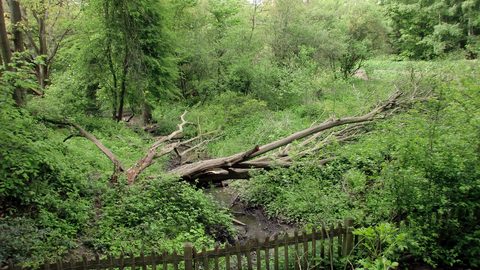 Hampstead Heath and the Village A London Day That Needs Decent Weather
Climb Parliament Hill for the skyline view, swim in the mixed pond, and retreat to Kenwood House if the weather turns—all from Hampstead station.
Hampstead Heath and the Village A London Day That Needs Decent Weather
Climb Parliament Hill for the skyline view, swim in the mixed pond, and retreat to Kenwood House if the weather turns—all from Hampstead station.
-
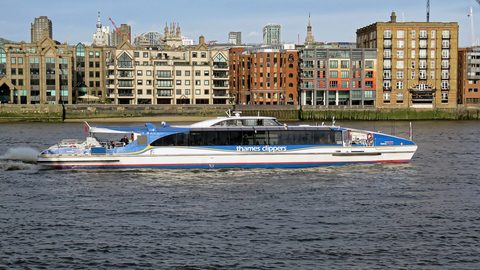 Thames Boat or Tube When the Slow Route Earns Its Fare
The Uber Boat beats the Tube on three specific Thames journeys: Bankside to Greenwich, Westminster to Tower Pier, and Blackfriars to Canary Wharf.
Thames Boat or Tube When the Slow Route Earns Its Fare
The Uber Boat beats the Tube on three specific Thames journeys: Bankside to Greenwich, Westminster to Tower Pier, and Blackfriars to Canary Wharf.
-
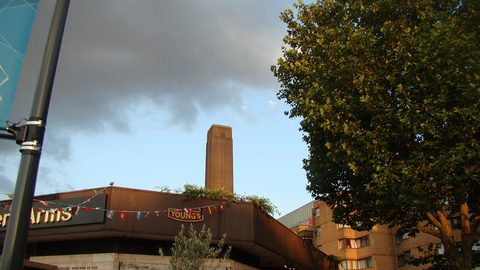 A South Bank Walk That Is Worth Your Time Not an Attraction Checklist
Start at Southwark Bridge, move through Bankside and the Tate Modern's Turbine Hall, then reach Borough Market before the 11:30am lunch crush.
A South Bank Walk That Is Worth Your Time Not an Attraction Checklist
Start at Southwark Bridge, move through Bankside and the Tate Modern's Turbine Hall, then reach Borough Market before the 11:30am lunch crush.
-
 SIMs, eSIMs and Staying Connected on Long-Distance Walking Routes
Honest look at mobile connectivity on long-distance walking routes. Real costs of local SIMs vs eSIMs, rural coverage gaps, and activation headaches in border zones.
SIMs, eSIMs and Staying Connected on Long-Distance Walking Routes
Honest look at mobile connectivity on long-distance walking routes. Real costs of local SIMs vs eSIMs, rural coverage gaps, and activation headaches in border zones.