Where to Stay in Quebec City: A Clear Choice Between the Fortified Upper Town and Saint-Roch
Choose between a hotel inside Quebec City's 400-year-old fortifications or across the cliff in Saint-Roch, with real CAD rates and the trade-offs each neighbourhood demands.
Where to Stay in Quebec City: a Clear Choice Between the Fortified Upper Town and Saint-Roch
The common mistake is to assume that because Quebec City is compact, every neighbourhood is interchangeable for a night's sleep. They are not. The walled Upper Town puts you inside the postcard. It also traps you inside a tourist ecosystem where a mediocre omelette costs far more than it should and the nearest grocery store is a long walk through a snowpacked corridor. Across the Côte d'Abraham cliff, Saint-Roch operates on a different economy: better restaurants, lower nightly rates, and the feel of a real neighbourhood where people hang laundry above the street. The tradeoff is the hill. To decide where to stay in Quebec City, you pick a side and commit.
Quebec City Hotels Old Quebec: Inside the Walls and What it Costs You
Vieux-Québec Haute-Ville is a 400-year-old fortification sitting on a cliff with an average 12 to 18 percent grade from the St. Lawrence River up to Dufferin Terrace. Every walk is a climb. Every curb is a negotiation. The reward is waking up to the Fairmont Le Château Frontenac silhouette, cobblestones under your window, and the Terrasse Dufferin boardwalk a three-minute walk away for morning coffee with a river view.
The Landmark Hotel: Worth It or Not
Whether the Fairmont property is worth the premium comes down to what you want from a hotel room. If you need a landmark stay, the guided tours of the building itself are open to non-guests, so you can see the interior without sleeping in it. What you actually pay for at the grande dame on the cliff is the address and the lobby. The rooms are period appropriate, which means small, and the soundproofing between walls is 1900s construction. A boutique hotel on Rue Sainte-Anne will give you a quieter room, a courtyard exposure that blocks street noise, and a nightly rate that runs well below the landmark's summer pricing. The big hotel is worth it only if the name itself is the reason for the trip. For everyone else, the better bet is a well-located boutique within a three-minute radius of the castle-like building where you can look at it rather than be inside it.
Parking and the Cost of Driving In
If you arrive by car, the primary parking within the walls is the Hôtel de Ville underground structure at 2 Rue Pierre-Olivier-Chauveau. The 2024 daily max rate was $24 CAD, and the 2025 figure is published by the Ville de Québec parking authority, so confirm before you go. Height clearance is 1.8 metres. There are four Level 2 EV chargers operated by Flo. Street parking is enforced 9:00 to 21:00 Monday through Saturday and 9:00 to 17:00 Sunday, and east of Rue d'Auteuil the residential permit zones have no visitor parking option. Do not drive into the Upper Town hoping to find a meter. You will spend 20 minutes circling and end up at the Hôtel de Ville garage anyway.
Winter Walking Inside the Walls
The city maintains heated sidewalks on Rue du Trésor and Rue Sainte-Anne only. Every other street in Vieux-Québec becomes a snowpacked or compact-ice corridor between December and March, particularly Rue Saint-Louis and Côte de la Montagne. Heated handrails on the Escalier Casse-Cou, the Breakneck Steps connecting Upper and Lower Town, operate November through April, and the staircase never closes. Those 59 steps on a 12 percent grade with ice underfoot demand proper traction aids. Budget $15 CAD for clip-on crampons sold at any pharmacy. The alternative is the funicular, which costs $5 CAD per ride and is not included in the RTC transit pass. The funicular also breaks down periodically, so the staircase is the reliable fallback.

Best Neighbourhoods Quebec City Accommodation: Comparing the Districts
Quebec City's accommodation geography breaks into five districts worth considering, and two that matter most for the stay decision: the walled Upper Town and Saint-Roch. The others fill specific use cases.
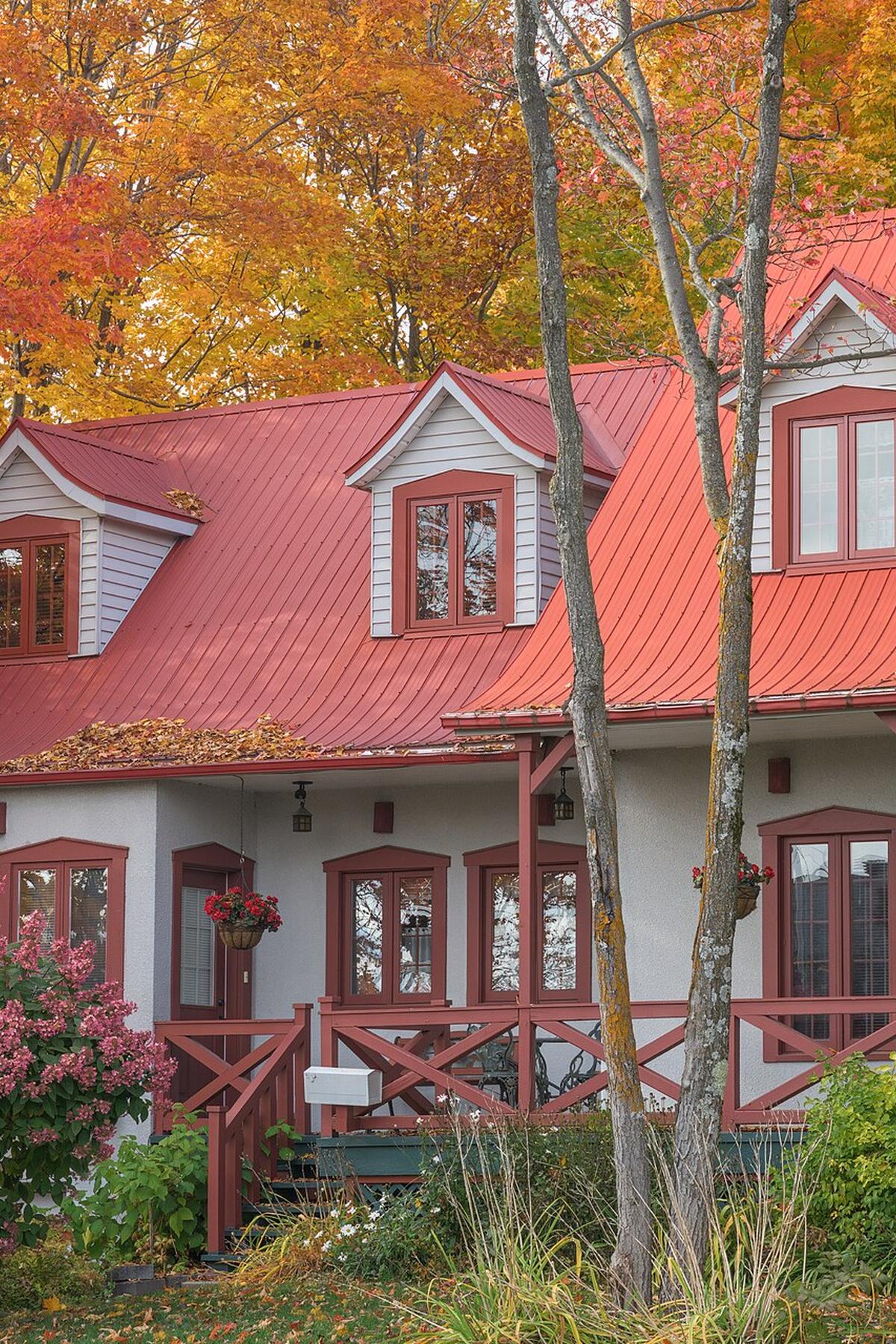
- Vieux-Québec Haute-Ville: Fortified clifftop core. Over 80 sit-down restaurants within the walls. Highest concentration of landmark hotels and heritage buildings. Steepest prices and densest crowds June through September.
- Saint-Roch: Former working class, now the city's best food district. 41 sit-down restaurants per the 2025 business registry, highest of all neighbourhoods. Flat terrain south of Rue du Pont. Parking rate at Îlot Fleurie was $12 CAD daily max in 2024. Quiet after dark except for Rue Saint-Joseph.
- Saint-Jean-Baptiste: Residential quarter with colourful houses and bistros. Rue Saint-Jean restaurants price mains at $18 to $36 CAD. No public parking garages within neighbourhood boundaries. Side streets cleared within 36 hours of snow, so winter walking is unreliable.
- Limoilou: Gritty gentrifying grid along 3e Avenue. Authentic local life and a farmers market. Best for travellers who want a rental apartment feel and are willing to bus 12 minutes into the old city.
- Montcalm: Museum district at the edge of the Plains of Abraham. Grand avenues, quieter at night, good for families who want green space adjacent to the walls.
Saint-Roch Hotels Quebec: the Neighbourhood That Eats Better and Costs Less
Saint-Roch sits across the Côte d'Abraham from the Upper Town. The southern half, below Rue du Pont, is almost flat. The northern edge climbs at a 10 to 15 percent grade toward the cliff. You walk uphill into the old city every time you want the fortifications, and you walk downhill back to dinner. That single climb, which takes 12 to 18 minutes from the Gare du Palais to the base of the walls, is the entire downside.
What You Get for the Climb
The nightly rate differential is substantial between a comparable boutique hotel in the Upper Town and one in Saint-Roch, measured in shoulder season. During the Festival d'été surge in July, when the Upper Town market rate spikes sharply and rooms vanish by March, Saint-Roch hotels spike less aggressively and still have availability two weeks out. The neighbourhood's 41 sit-down restaurants skew casual and counter service, with 12 of them operating counter ordering, which keeps the average main course well below equivalent dishes inside the walls. Seven of those restaurants serve dinner past 23:00 on Friday and Saturday, compared with two in Petit-Champlain that serve after 22:00 year round. Saint-Roch also has the Îlot Fleurie underground parking at 245 Rue du Pont, with a 2.0 metre clearance and a daily max rate of $12 CAD in 2024, half the cost of parking inside the walls. A secondary surface lot at 330 Rue de la Couronne charges a flat $10 CAD after 17:00 and on weekends.
The Winter Surface Problem
Rue Saint-Joseph, the pedestrian spine of Saint-Roch, is cleared within four hours of snowfall. The Rue de la Couronne underpass at the rail viaduct regularly ices over due to drainage failure; the city applies calcium chloride manually, but the timing is inconsistent. If you are staying in Saint-Roch in January or February, you need the same traction aids you need in the Upper Town. The difference is that Saint-Roch's residential side streets are priority 3 routes, cleared within 36 hours or after the storm ends, whichever comes later. After a heavy snow, the walk from your hotel to the bus stop at Gare du Palais may be through ankle-deep slush for two days.
The Landmark Hotel: the Honest Assessment
The Fairmont Le Château Frontenac is the most photographed hotel in North America and the anchor of the Quebec City skyline. It is also a working hotel with standard rooms that start at a premium over every other property in the province. Whether it is worth it depends on what you optimise for.
If you optimise for location and history access, the answer is no, because you can walk into the lobby and take the guided tour without being a guest. The hotel's public areas are open. The view from the Terrasse Dufferin is free. The rooms themselves are period accurate, which means small bathrooms, single-pane windows, and heating systems that struggle in the February wind chill. A boutique hotel on Rue Sainte-Anne or Rue Saint-Louis, such as the Auberge Saint-Antoine, gives you a better appointed room with soundproofing, a breakfast-included rate, and a courtyard exposure that blocks street noise, for well below the landmark's summer pricing. The Auberge Saint-Antoine also sits a 90-second walk from the Terrasse Dufferin and the funicular access, so you lose nothing in convenience.
If you optimise for the experience of telling people you stayed there, the castle on the cliff is worth it. That is a valid reason. But the traveller who wants to spend that budget on food and local experience should put the money toward a Saint-Roch boutique, a dinner at a restaurant on Rue Saint-Jean, and a taxi budget for the days you do not feel like climbing the Côte d'Abraham.
Inside the Walls vs Saint-Roch: the Decision Framework
The walled Upper Town suits the traveller who wants to step out of their hotel and be in the centre of the attraction, who values the feeling of living inside the fortifications over the quality of the dinner, and who budgets for the premium. It does not suit the traveller who wants a quiet evening away from cruise ship crowds, who eats late, or who needs affordable parking.
Saint-Roch suits the traveller who prioritises food and value over proximity, who does not mind a 12-minute uphill walk to reach the old city, and who prefers a neighbourhood where the restaurant owner remembers your face after two nights. It does not suit the traveller with mobility limitations who cannot manage the grade, the traveller who wants to stumble from hotel bar to nightclub without a coat, or the traveller who only has one day and needs every minute inside the walls.
For the traveller with three full days, the smart play is Saint-Roch for the first two nights and a final night inside the walls. That gives you the neighbourhood experience and the wake-up inside the postcard, without paying the premium for the entire stay.
Common Questions
Is Saint-Roch safe at night?
Yes. Saint-Roch is a dense urban neighbourhood with active street life until 23:00. Rue Saint-Joseph and Rue du Pont are well lit and patrolled. Standard city caution applies after midnight on side streets, same as any North American downtown.
Can I walk from Saint-Roch to the Upper Town with luggage?
Not comfortably. The grade from Gare du Palais to the walls is 10 to 15 percent, and the escalator at the Côte d'Abraham is often out of service. Take a taxi or the RTC bus 800 for $3.75 CAD. The ride takes 6 minutes.
What is the best hotel on Rue Sainte-Anne?
The Auberge Saint-Antoine is the most reliable pick for a courtyard room, breakfast-included rate, and soundproofing from street noise. Book a room on the far side from the lift for quietest sleep.
Does the Fairmont Le Château Frontenac have a pool?
No. The hotel has no pool, no fitness centre, and no air conditioning in heritage rooms. The property trades modern amenities for landmark status. Confirm the room type before booking.
Read next
-
 Eating through Quebec City when the temperature drops below zero
Quebec City's food culture makes sense in the snow. From roadside poutine to a full sugar shack feast, this is how to eat well when the wind off the St. Lawrence hurts your face.
-
 Quebec City Things to Do That Are Not Just Rue du Petit Champlain
Quebec City beyond Rue du Petit Champlain: the Morrin Centre prison cells, Montmorency Falls via ferrata, and Wendake's Huron-Wendat longhouse.
-
 Best Time to Visit Quebec City by Season Festival Weeks and the Dead Zone
Quebec City by season: February's Winter Carnival at -20°C, July's Festival d'été crowds and hotel spikes, and why late October is a dead zone to avoid entirely.
-
 Getting Around Quebec City in Winter and Without a Car
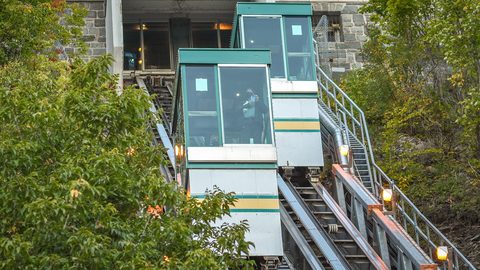
Navigate Quebec City without a car using the RTC bus network and Nomade app, plus what to do when the funicular fails and winter ice takes over the sidewalks.
-
 Quebec City Itinerary for Two Days Without Walking the Same Hill Four Times
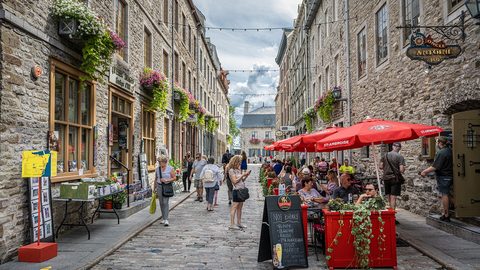
A two-day Quebec City itinerary that keeps you on one level per day so you are not climbing the cliff repeatedly, with lunch timed before the 2pm kitchen shutdown.
-
 Day Trips From Quebec City Montmorency Falls Île d'Orléans or Wendake
-
 Walking Australia's Long-Distance Trails Without a Tour Company
Plan the Bibbulmun, Larapinta, and Overland Track without a tour company. Real permit costs, resupply gaps, and honest nightly budgets.
-
 SIMs, eSIMs and Staying Connected on Long-Distance Walking Routes
Honest look at mobile connectivity on long-distance walking routes. Real costs of local SIMs vs eSIMs, rural coverage gaps, and activation headaches in border zones.