A Two Day Quebec City Itinerary That Does Not Send You Up and Down the Cliff Repeatedly
A two-day Quebec City itinerary that keeps you on one level per day so you are not climbing the cliff repeatedly, with lunch timed before the 2pm kitchen shutdown.
This Quebec City Itinerary Solves the City’s Only Real Problem
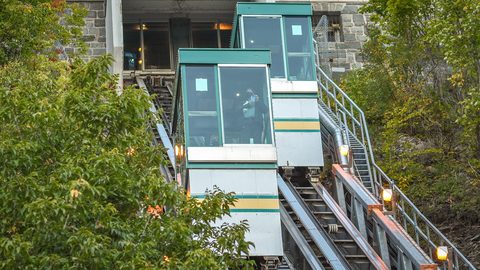
You are standing at the base of the Funiculaire du Vieux-Québec early in the morning. The car is not running. Freezing rain overnight. You have 170 steps of the breakneck staircase in front of you, or you walk 20 minutes around the cliff to the Côte de la Montagne, a road grade steep enough to make your knees protest by mid-morning. This is the central logistical problem every Quebec City itinerary must solve: the city is a 400-year-old fortress built on a cliff, and every route between Vieux-Québec Haute-Ville and Vieux-Québec Basse-Ville is a hill, a staircase, or a cable car that sometimes fails. This two-day plan assigns one full day to Upper Town and one full day to Lower Town, uses the funicular exactly once downhill in the morning, and never makes you climb the same staircase twice. You walk the full circuit of the Fortifications of Québec on Day One and zero significant hills on Day Two.
Day One: Haute-Ville, the Walls, and the 2pm Kitchen Shutdown
Start at the Fortifications of Québec
Arrive at Rue des Carrières from Place d'Armes early in the morning. Walk the full circuit of the Fortifications of Québec, a UNESCO World Heritage Site inscribed in 1985 as part of the Historic District of Old Québec, built between 1608 and 1832. The rampart walk gives you the city's layout immediately and keeps you at cliff height, which means zero unnecessary descents. Allow 45 minutes at a steady pace.
Terrasse Dufferin and the Promenade des Gouverneurs
The wooden boardwalk replaced in 2024 runs 670 m along the cliff edge. Walk it toward the Fairmont Le Château Frontenac, then take the Promenade des Gouverneurs that joins Terrasse Dufferin to the Plains of Abraham. This gravel path hugs the cliff. It is flat, and it delivers you directly to the Plains without stairs.
Plains of Abraham Before Lunch
The Plains of Abraham cover 98 hectares managed by the National Battlefields Commission. You do not need to hike the entire park. Walk the edge nearest the cliff for the St. Lawrence views, then cut inland toward Grande Allée. The Anneau de glace skating rink operates mid-December to mid-March and is free; skate rental runs roughly CAD 10 per two hours, set by the Commission and confirmed on their site each season. If winter weather makes the outdoor walk unpleasant, swap the Plains for the Musée national des beaux-arts du Québec at 179 Grande Allée Ouest. Adult admission sits around CAD 25, verified on the museum's official page before you go, and the Pierre Lassonde Pavilion has a heated glass atrium that functions as an indoor park. Free admission on the first Sunday of each month.
The Late Lunch Problem: Eat Before 2pm
Most restaurants in Quebec City close their kitchens between 2pm and 5pm. This is not a suggestion. If you sit down for lunch just before the mid-afternoon closure, you will be served. A quarter of an hour later, the same restaurant will tell you the kitchen is closed. Rue Saint-Jean, which runs through the upper town and into the Saint-Jean-Baptiste district, has the highest concentration of restaurants that serve continuously through the afternoon. Chez Ashton on Rue Saint-Jean serves poutine with squeaking cheese curds and stays open through the gap. Tourtière du Lac-Saint-Jean, the deep-dish meat pie with potato and game, appears on menus at Le Hobbit and La Buche, both on Rue Saint-Jean. Eat before the mid-afternoon closure.
Afternoon on the Ramparts and the Basilica
Notre-Dame de Québec Basilica, built 1647, is a five-minute walk from Rue Saint-Jean. Free entry. The Holy Door is inside. By 15:30, walk the Fortifications of Québec again from the opposite direction and see how the afternoon light hits the roofs of the lower town below. La Citadelle, the active military base of the Royal 22e Régiment, offers 60-minute guided tours. Adult admission runs roughly CAD 18, confirmed via the Musée Royal 22e Régiment website. Summer hours run 09:00 to 18:00 daily from mid-May to early September; winter hours drop to 10:00 to 16:00 daily. Book ahead online. If the Citadelle tours are sold out, walk the exterior walls for free.
Evening: One Neighbourhood Per Day
Stay in the upper town for dinner. Rue Saint-Jean has a dozen bistros within a three-block stretch. The dead zone between 2pm and 5pm means some restaurants do not reopen for dinner until early evening. Confirm the kitchen opens before you sit down. The Observatoire de la Capitale at 1037 Rue De La Chevrotière, on the 31st floor of the Édifice Marie-Guyart, stays open into the evening in summer. Adult admission runs roughly CAD 15.25, check the Observatoire's site for the current rate. Fully enclosed and heated year-round. It gives a final overview of the day's route without walking back uphill.

Day Two: Basse-Ville, Saint-Roch, and One Funicular Ride
Ride the Funicular Once, Downhill, Early
Leave the upper town by the Funiculaire du Vieux-Québec early in the morning. The upper station is on Rue des Carrières near Terrasse Dufferin. The fare is roughly CAD 5 one-way, cash or card, set by the operator and confirmed at the station. The car runs 07:30 to 23:00 daily but closes during freezing rain or wind above 70 km/h. If the funicular is down, walk the Côte de la Montagne down instead of up. It is a road, not a staircase, and downhill is manageable. Do not take the 170-step Escalier du Château or the Escalier du Cap-Blanc on the way down. Those are for ascending, and you are not coming back up today.
Quartier Petit Champlain and Place Royale
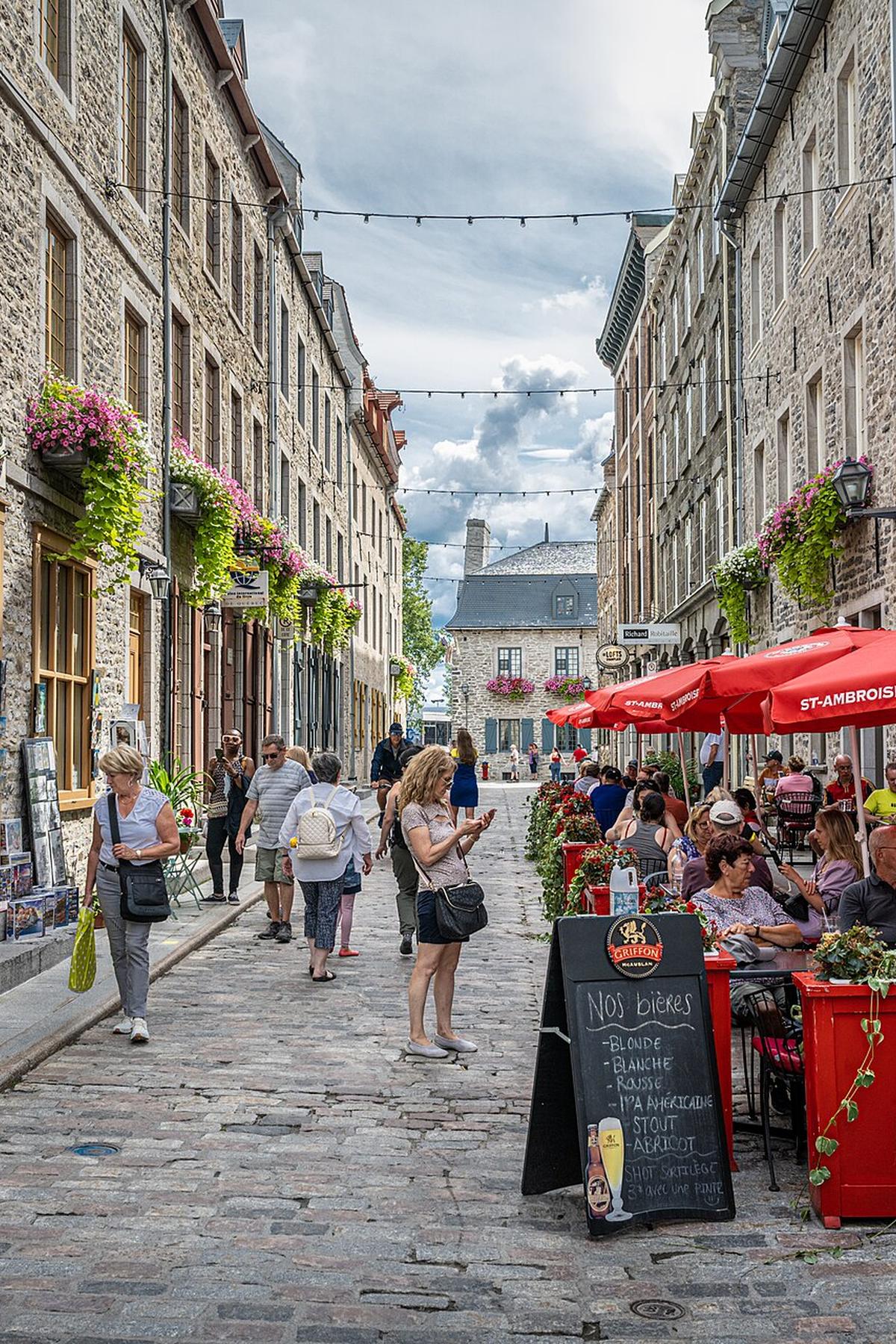
The funicular deposits you at the lower station at 16 Rue du Petit-Champlain. Rue du Petit-Champlain is permanently pedestrian-only. It is the most photographed street in the city, and at 09:00 it is empty of cruise crowds. Walk it south toward Place Royale, where Samuel de Champlain established the 1608 settlement. The church at Place Royale, Église Notre-Dame-des-Victoires, was built in 1688 and is the oldest stone church in Canada. Free entry, donation requested. You can see the entire square in 20 minutes before the tour buses arrive.
Musée de la Civilisation and the Marché du Vieux-Port
Walk from Place Royale to the Musée de la civilisation at 85 Rue Dalhousie. Adult admission runs roughly CAD 24, check the museum's site for the current rate. The permanent exhibition "People of Québec, Then and Now" covers the region's Indigenous and colonial history in a fully climate-controlled space. The museum is closed Mondays from early September to late June. If it is Monday or you want a free alternative, walk a short block to the Marché du Vieux-Port, the farmers' market. Local producers sell cider from Île d'Orléans, Cretons pork spread, and Soupe aux pois. The market is indoors and heated, open year-round.
Lunch in Saint-Roch, Not the Lower Old Town
Do not eat lunch in Quartier Petit Champlain. The restaurants there serve tourists at tourist prices and close in the early afternoon. Walk 15 minutes northwest along Rue Saint-Jean, pass the old city wall, and enter Saint-Roch. This former working-class district now holds the best independent restaurants in Quebec City. Lunch menus run until mid-afternoon in most places. Try the tourtière or a cider flight. The neighbourhood has the Gare du Palais at 450 Rue de la Gare du Palais, a heated indoor waiting hall open year-round, which doubles as a good landmark for navigation.
Afternoon on the Lévis Ferry and the Skyline View
From Saint-Roch, walk back to the Bassin Louise ferry terminal at 1 Rue des Carrières. The Québec-Lévis ferry is operated by the Société des traversiers du Québec, crosses in 12 minutes, and runs every 20 to 30 minutes between 07:00 and 19:00, then hourly until 02:00. The pedestrian round-trip fare runs roughly CAD 7.80, confirmed on the operator's site. All vessels have heated cabins. The Lévis arrival point is Traverse Lévis at 5994 Rue Saint-Laurent. Walk 600 m along Chemin du Fleuve to Terrasse de Lévis for the best panoramic view of Quebec City's skyline and the Château Frontenac. The ferry is suspended when St. Lawrence River ice exceeds 80 percent coverage. On those days, substitute the upper station glass enclosure of the funicular, which has a heated waiting area with an Old Port view.
Evening in the Lower Town Without Climbing
Stay on the low side. Dinner in Saint-Roch or at the waterfront restaurants near the Marché du Vieux-Port. The funicular stops running at 23:00, and you have already used it once. If you need to return to a hotel in the upper town, walk the Côte de la Montagne uphill. It is a road, not stairs, and at night the traffic is light. Reserve a hotel in the lower town or Saint-Roch for the second night to eliminate the climb entirely.
2 Days Quebec City Plan: the Walk-Up and the Must-Know Timing
This 2 days Quebec City plan asks you to walk a full day each day but spend zero of those steps on the same steep incline twice. The cost of the funicular is roughly CAD 5. The cost of the ferry is roughly CAD 7.80 round trip. The cost of a wrong turn that deposits you at the bottom of the Escalier du Cap-Blanc at 16:30 is 170 stairs plus a 15-minute detour around the cliff. Label that staircase on your phone map before you arrive. Avoid the Escalier du Château entirely. The only time you should take them is if the funicular is closed, you need to get up, and you have a flight to catch. In that case, budget 10 minutes and bring water. Do not run them with luggage.
Quebec City Weekend Route: Day One Upper, Day Two Lower
Why One Neighbourhood Per Day Works
This Quebec City weekend route assigns Day One entirely to Vieux-Québec Haute-Ville and Day Two entirely to Vieux-Québec Basse-Ville plus Saint-Roch. The reason is the cliff. If you split both days between Upper and Lower Town, you climb the Côte de la Montagne, the Escalier du Château, or the Escalier du Cap-Blanc at least twice per day. By Day Two you are exhausted. By Day Two afternoon you start taking the funicular up and down multiple times at roughly CAD 5 per ride, which adds up fast and still does not solve the wait times when the car is full of cruise passengers.
Upper Town Lower Town One Day Each: What You Gain
Upper Town Lower Town one day each means you carry nothing up or down the hill except your body. You can wear proper walking shoes on the Fortifications of Québec without carrying a second pair for the cobblestones. You can buy maple taffy on snow at Terrasse Dufferin on Day One without worrying about it melting while you walk the waterfront on Day Two. You can spend the afternoon of Day One on the Plains of Abraham and the afternoon of Day Two on the Lévis ferry, and the only connection between them is a single downhill funicular ride early on Day Two morning.
Quebec City Without Backtracking: the Staircases to Skip and the Winter Failures
Staircases to Avoid
- Escalier du Château: 170 steps, no handrail for the first 30, directly connects the upper town near the Château Frontenac to the river. Use only in an emergency or if the funicular is closed and you must ascend immediately.
- Escalier du Cap-Blanc: Exposed to wind, icy in winter, connects the Quartier Petit Champlain to the Cap-Blanc residential strip. The Cap-Blanc strip itself has no exit except staircases at both ends. Do not walk into Cap-Blanc unless you want to do a loop that forces you back up stairs.
- Côte de la Montagne: This is a road, not stairs, but the grade is severe. Walk it downhill only. Walk it uphill only if the funicular is closed and you have no other option.
Winter Swaps When Outdoor Routes Close
If the Dufferin Terrace boardwalk is too icy, swap it for Bistro Le Sam inside the Château Frontenac at 1 Rue des Carrières. The floor-to-ceiling windows face the river. If Place Royale is unpleasantly cold, swap it for the Musée de la civilisation. If the Plains of Abraham are covered in deep snow, the Musée national des beaux-arts du Québec has a glass atrium. If Quartier Petit Champlain is too crowded with winter carnival attendees, the upper station of the funicular has a heated glass enclosure that counts as a viewpoint itself.
The Funicular Failure Case
The Funiculaire du Vieux-Québec closes during freezing rain or sustained wind above 70 km/h. Check the weather at 07:00 on Day Two. If the funicular is down, take the Côte de la Montagne downhill. It takes 12 minutes on foot. If you need to return to the upper town and the funicular is still down, use the same road uphill. Budget 20 minutes and wear boots with traction. Ice cleats are sold at every pharmacy in Old Quebec for roughly CAD 15 to CAD 20. Buy them before you need them.
Common Questions
Can I do both Upper and Lower Town in one day?
Technically yes, but you will climb the Escalier du Château or the Côte de la Montagne at least three times. By 15:00 your legs will be tired enough that you skip the Plains of Abraham or Saint-Roch. One neighbourhood per day is faster and less painful.
What do I do if my hotel is in Upper Town but Day Two is in Lower Town?
Take the funicular down early in the morning and leave your luggage with the hotel bell desk. Come back for it at the end of Day Two via the Côte de la Montagne uphill. Or book a hotel in Saint-Roch for the second night.
Is the funicular worth the fare per ride?
Yes for the downhill trip once. No for multiple round trips. A single downhill ride saves you the 170 steps of the Escalier du Château and the 20-minute walk around the cliff. Multiple rides cost more than a bus pass and still leave you waiting in line.
Where do I eat between 2pm and 5pm?
On Rue Saint-Jean in the upper town or in Saint-Roch. Chez Ashton serves poutine continuously. The Marché du Vieux-Port has market stalls open through the late afternoon. Most other neighbourhoods shut their kitchens in the mid-afternoon closure window.
Read next
-
 Eating through Quebec City when the temperature drops below zero
Quebec City's food culture makes sense in the snow. From roadside poutine to a full sugar shack feast, this is how to eat well when the wind off the St. Lawrence hurts your face.
-
 Quebec City Where to Stay Inside the Walls or Across in Saint-Roch
Choose between a hotel inside Quebec City's 400-year-old fortifications or across the cliff in Saint-Roch, with real CAD rates and the trade-offs each neighbourhood demands.
-
 Quebec City Things to Do That Are Not Just Rue du Petit Champlain
Quebec City beyond Rue du Petit Champlain: the Morrin Centre prison cells, Montmorency Falls via ferrata, and Wendake's Huron-Wendat longhouse.
-
 Best Time to Visit Quebec City by Season Festival Weeks and the Dead Zone
Quebec City by season: February's Winter Carnival at -20°C, July's Festival d'été crowds and hotel spikes, and why late October is a dead zone to avoid entirely.
-
 Getting Around Quebec City in Winter and Without a Car
Navigate Quebec City without a car using the RTC bus network and Nomade app, plus what to do when the funicular fails and winter ice takes over the sidewalks.
-
 Day Trips From Quebec City Montmorency Falls Île d'Orléans or Wendake
-
 Walking Australia's Long-Distance Trails Without a Tour Company
Plan the Bibbulmun, Larapinta, and Overland Track without a tour company. Real permit costs, resupply gaps, and honest nightly budgets.
-
 SIMs, eSIMs and Staying Connected on Long-Distance Walking Routes
Honest look at mobile connectivity on long-distance walking routes. Real costs of local SIMs vs eSIMs, rural coverage gaps, and activation headaches in border zones.